Last updated: July 2026
Pantelleria, the volcanic island between Sicily and Tunisia, has no sandy beaches. Not one. The coast is black lava — flat shelves, boulder coves, a few tongues of rounded pebbles — and the water off it is some of the clearest in the Mediterranean. If you arrive expecting a lido with sunbeds and a bar, you will be disappointed. If you arrive with water shoes and a mask, you will not.
That absence is the point. The coves below are public, free and unstaffed — no kiosks, no umbrella rental, no attendants raking sand at dawn, and no lifeguards. The island does have a couple of proper lidos where you can take a sunbed and stay for the evening, both on the west coast: Lido Shurhuq at Suvaki and Sesiventi at Mursia, covered in our bars and nightlife guide. Everywhere else, you are on your own with the rock. This page covers where to swim, how to get in and out of the water, and which coast to pick on a windy day.
- Lago di Venere · Balata dei Turchi · Cala Gadir · Cala Karuscia
- Arco dell’Elefante · Cala Levante · Cala Tramontana · Cala Nikà
- Martingana · Laghetto delle Ondine · Cala Cinque Denti
Which coast should you swim on today?
Whichever one the wind is not hitting. Pantelleria is exposed on every side and the two dominant winds come from opposite directions: the maestrale from the north-west and the scirocco from the south-east. When one coast is churning, the other is usually glassy. Check the forecast in the morning and drive to the sheltered side — the whole island is under an hour across.
This is the single most useful habit on the island, and it is why locals never commit to a swimming spot the night before. Cala Levante and Cala Tramontana sit back to back on the same headland precisely so that one of them works whatever the weather. The walking routes follow the same logic in reverse: take the exposed ridge on a calm day.
Two practical notes that apply everywhere. Water shoes are not optional — lava is sharp, sea urchins are common and the rock gets genuinely hot underfoot by mid-morning. And there is almost no natural shade anywhere on this coast, so plan around the sun rather than expecting to hide from it.
Lago di Venere (Specchio di Venere)
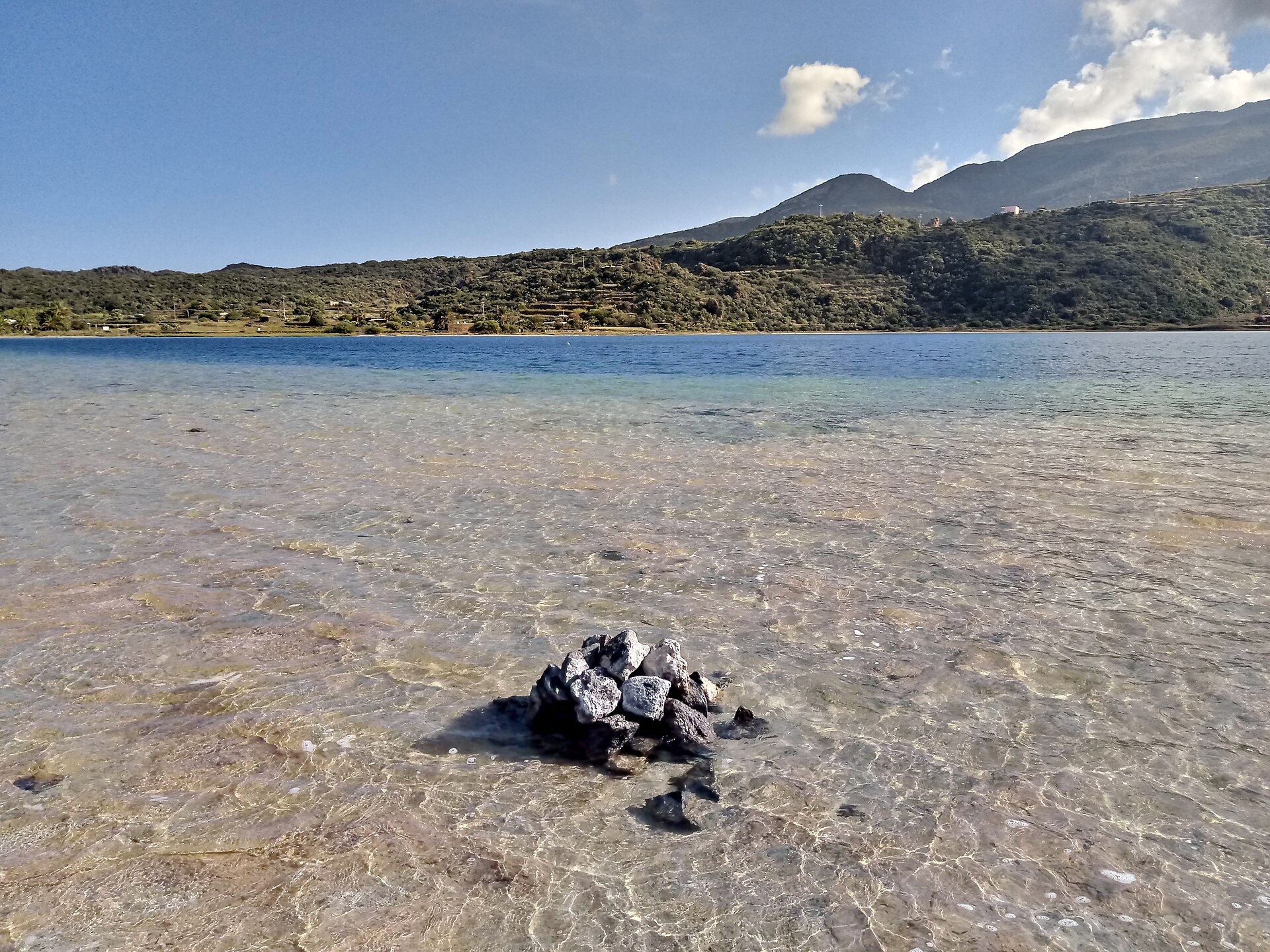

The island’s emblem: a shallow lake filling an old volcanic crater in the north, fed by three thermal springs and rimmed with pale mud that people have been coating themselves in for as long as anyone remembers. The water shifts from jade to turquoise through the day, it is warm, and the entry is gentle — which makes it the closest thing Pantelleria has to a family beach.
It is also an ecosystem found nowhere else, built over millennia by photosynthetic cyanobacteria working with the hydrothermal springs, and it is protected accordingly. In June 2023 the municipality issued ordinance no. 95 setting out what you may and may not do here, after years of damage from casual use. The rules are real and they are enforced.
What is banned: motor vehicles and bicycles at the lakeside, umbrellas and deckchairs, canoes, surfboards and paddleboards, tents, open fires, walking on or picking the shoreline vegetation, leaving any waste, and spilling anything at all into the water or onto the ground. Laying towels or clothes on the vegetation around the lake and along the shore is also prohibited — an unexpected one that catches most visitors out.
What is allowed: the mud. The park directorate confirmed that treatments can continue, within the cautions the ordinance sets. Scoop it, wear it, let it dry, rinse it off in the lake. No soap, no shampoo, nothing that does not belong in the water.
There is a restricted-traffic zone in force, so read the signs on the approach rather than driving to the water’s edge. There are no facilities at the lake — no kiosk, no toilets, no shade — so bring water and a hat and take everything away with you. The lake is also covered on our thermal springs page alongside the island’s other hot-water sites.
Balata dei Turchi
The wildest swim on the island. A broken amphitheatre of black cliffs on the remote south-west coast drops to a wide flat slab of lava — the balata — that works as a natural sun deck, with deep blue water straight off the edge. The name recalls the Ottoman raiders who used the inlet as a landing point.
The approach is a narrow lane and then a footpath down through loose volcanic rubble, so wear proper shoes and give yourself time. There is nothing at the bottom: no kiosk, no toilets, no bin, no shade, and patchy phone signal. Bring more water than you think you need and carry everything back out.
The water is deep close in, which makes it superb for snorkelling and poor for small children. Go in the morning, when the sea is usually flat and the cliff still throws shade onto the rock; by afternoon the slab is baking and the wind often gets up. It is also one of the finest places on Pantelleria to watch the sun go down over Cap Bon — just do not plan to swim at that hour, and do not plan to find your way back up the path in the dark.
An alternative worth considering: reach it from the water instead. Several boat operators include this stretch of coast on a circuit of the island, and seeing the cliffs from below is a different experience entirely. Walkers can also come in overland along the Gelfiser lava flow route.
Cala Gadir
A working fishing harbour on the north-east coast that doubles as the island’s best all-round swimming spot. Lava blocks shelter a small inlet where the water stays calm even when the open coast is rough, concrete quays and ladders make getting in and out straightforward, and geothermal springs seep out along the rocks at the water line.
Those hot pools are the reason Gadir works in March as well as August. Bathers dam the natural rock bowls with loose stones and blend spring water with seawater until it is bearable. They are public, they are free, and they get busy at sunset. Keep soaks short if you are not used to the heat, and use nothing soapy: the springs feed straight into the sea. We cover them in more detail on the thermal springs page.
Snorkelling here is easy and rewarding — step off a ladder into a boulder field with good visibility on calm days. It is also a dive site with archaeology on the seabed; the diving centres run trips along this coast, and Dive-X is based at Cala Gadir itself. Parking is roadside and limited, so come early in July and August. By bus, the East Coast line serves this coast — check current times before relying on it.
Cala Karuscia
The easy-going swim of the north-east coast: a low shelf of flat lava that slips almost level into clear water, just north of Gadir. There is no sand, but the rock sits so close to the sea that you walk in rather than scramble, and simple ladders and small concrete decks make it manageable for children and older swimmers.
Sheltered and shallow at the edge, it stays calm on days when the open east coast turns choppy. Below the surface the lava continues in boulders and ledges that hold shoals of small fish, so it suits a relaxed close-to-shore snorkel as much as a sunbathe. Facilities are none — treat it as a wild cove, bring water and an umbrella, and carry out what you carry in.
The rock is uneven and slippery where it meets the water, so water shoes earn their place here. Pair a swim with the hot pools at Gadir a few minutes south, or carry on north towards Cala Cinque Denti and the Laghetto delle Ondine.
Arco dell’Elefante
.jpg)
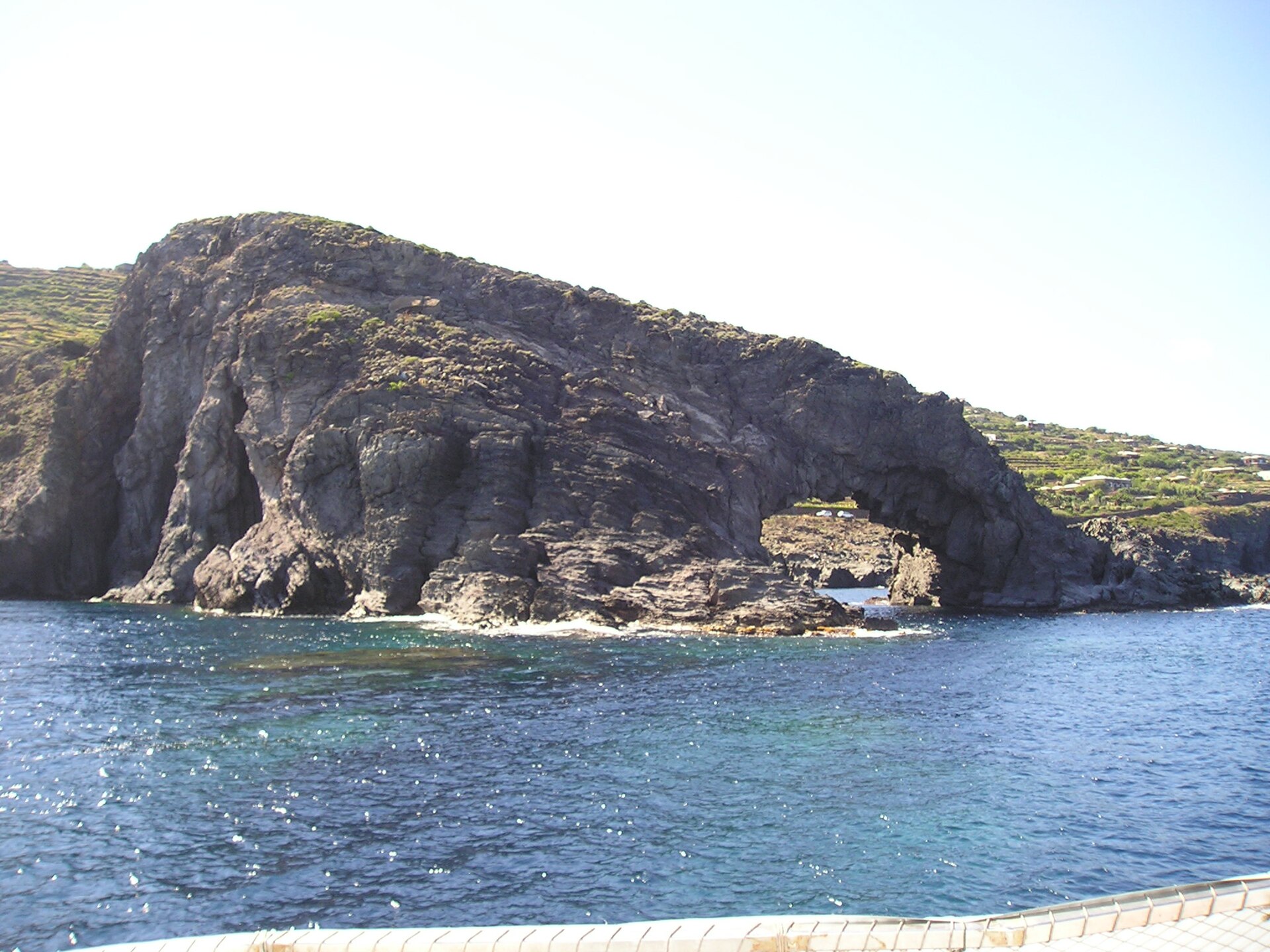
The island’s most photographed rock: a basalt arch on the east coast that looks unmistakably like an elephant lowering its trunk into the sea. It is a landmark first and a swimming spot second, but it is a genuine swimming spot — flat rocks for towels, a short pebble entry, and clear water either side of the arch.
Strong swimmers fin through the opening, which is the reason most people come. Do it early. The arch sits on a small cove with limited roadside parking that fills quickly in high season, and the tour boats arrive through the middle of the day. Before nine in the morning you may well have it to yourself, and the light on the arch is better anyway.
There are no facilities at the cove. There is no lifeguard, and swell funnels through the arch opening without much warning, so keep children well clear of the gap when there is any sea running. You can also walk in along the clifftop from Cala Levante — see the coastal walk — or see it from the water on a boat trip round the island.
Cala Levante
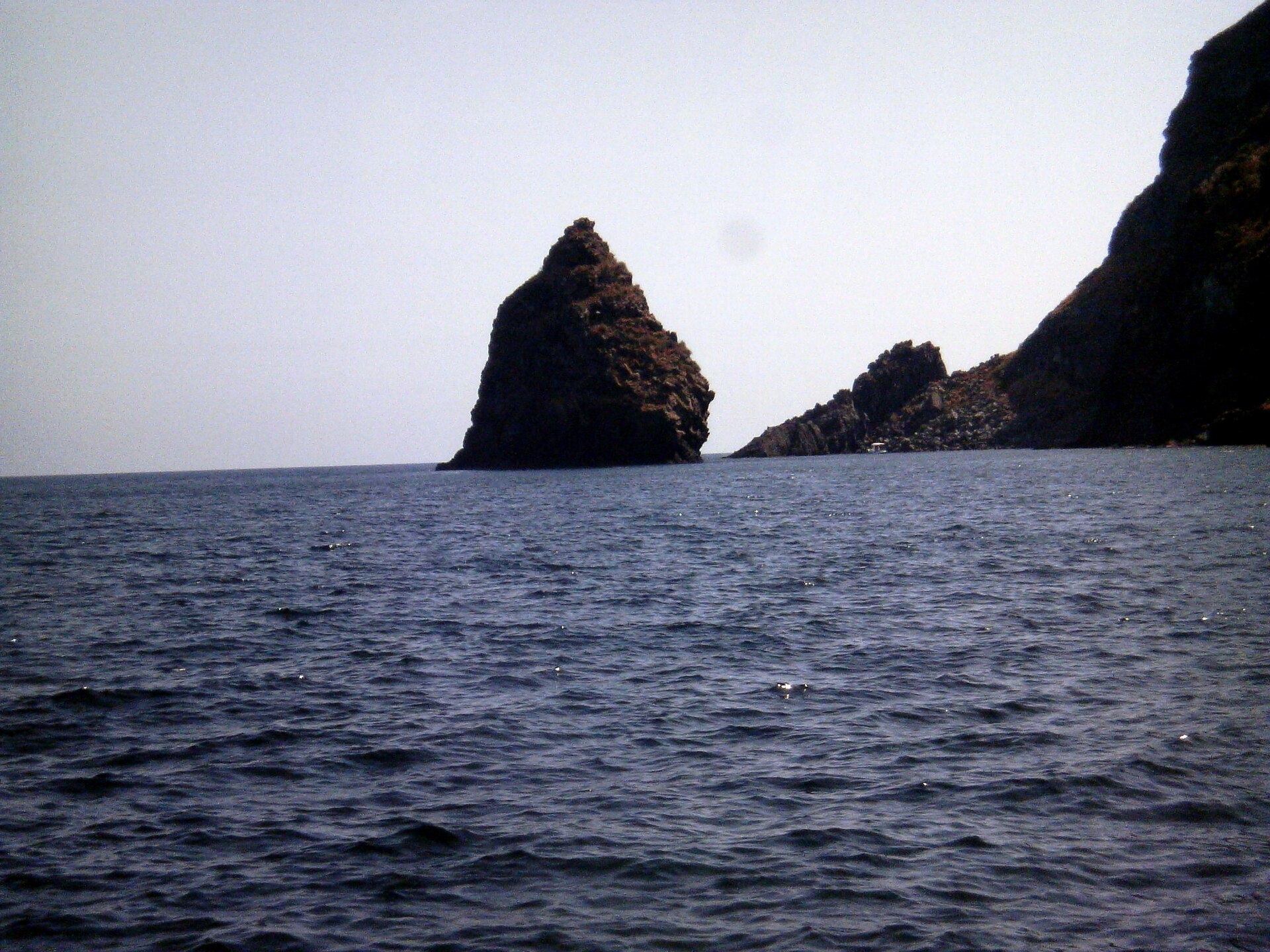

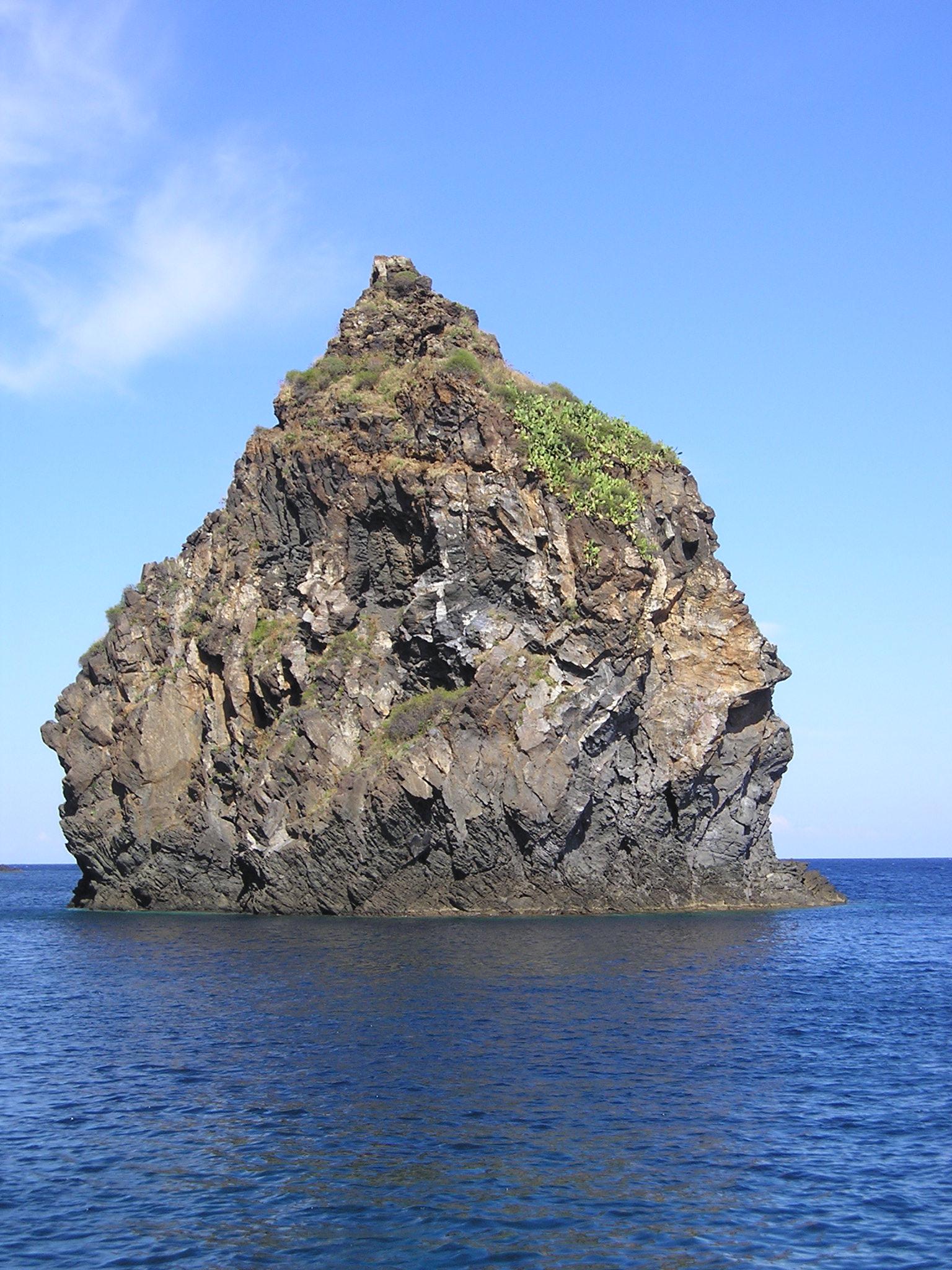
A small inlet below the village of Tracino, a couple of hundred metres from the Arco dell’Elefante and marked by a lava sea stack rising just offshore. Flat rock shelves take towels, a short tongue of rounded pebbles gives an easy entry, and the water is the colour that sells the island.
Levante faces south-east, so it is the calm option when the maestrale is blowing and the rough one when the scirocco arrives. Its twin, Cala Tramontana, sits on the other side of the same neck of land and behaves in the opposite way — the two together mean this corner of the island almost always has a sheltered swim available.
Snorkelling south towards the arch is the obvious excursion, over sea-grass and scattered lava, and the day boats that circle the island pause here. Parking is a small clifftop area that fills by mid-morning in August. Tracino has a couple of places to eat within a short walk uphill — see our restaurants guide for what is actually open and where it is.
Cala Tramontana

Levante’s quieter back-to-back twin, tucked into the same headland but facing north. A small pebble cove with basalt walls on three sides, a natural harbour that has sheltered fishing boats for centuries, and water that stays pool-flat when the southerly wind is roughing up the other side.
The pebble entry is gentle enough that you can walk in without shoes, which is rare here, and the cove shelves quickly to swimming depth. Ledges on the north wall catch the first sun; the opposite side stays shaded into the afternoon, which is worth knowing in July.
Snorkellers work the walls of the inlet. Strong swimmers sometimes round the headland towards the lighthouse on the Punta Spadillo side, though that is open water and needs a calm day and a marker buoy. Parking is a narrow roadside lay-by with passing places — leave room for the boats.
Cala Nikà
An open-air spa on the south-west coast, where geothermal water comes out of cracks in the basalt at close to bathing temperature and mixes with the sea. There is no beach in any conventional sense — a horseshoe of dark cliffs, a few flattened rock shelves, and hot water arriving from below.
Bathers dam small pools with loose stones and adjust the mix until it is comfortable, the same technique used at Gadir. Because the bay faces away from the prevailing maestrale it works well in spring and autumn, when the sea alone would be too cold for most people.
The descent is a stepped path over loose volcanic rubble — sturdy shoes, and not somewhere to carry a cooler. There are no facilities of any kind. Bring water, take a towel you do not mind staining, and note that phone signal is unreliable down on the rocks. The nearest village for a coffee or a meal afterwards is Scauri, uphill, where you will also find the sea cave at Sataria and a handful of restaurants on the water. By bus, the South-West line covers this side of the island.
Martingana
A remote inlet on the south coast that rewards the effort of getting there with water clarity that is startling even by Pantelleria’s standards. Steep cliffs, a scramble down to lava shelves, deep blue water immediately off the rock, and usually very few people.
This is a confident-swimmer cove. The entry is over rock rather than pebbles, there is no gradual shallow zone, and there is no one to help if things go wrong. In exchange you get one of the best snorkelling drop-offs on the island and the sense of having found something.
Nothing here but the sea — no shade, no water, no signal to speak of. Come in the morning, and pick a day when the south coast is not taking the scirocco. Many visitors see this stretch more easily from a boat, and the island circuits pass along it. Inland from here the ground rises towards Montagna Grande, and the coast road links back to the island’s thermal springs.
Laghetto delle Ondine
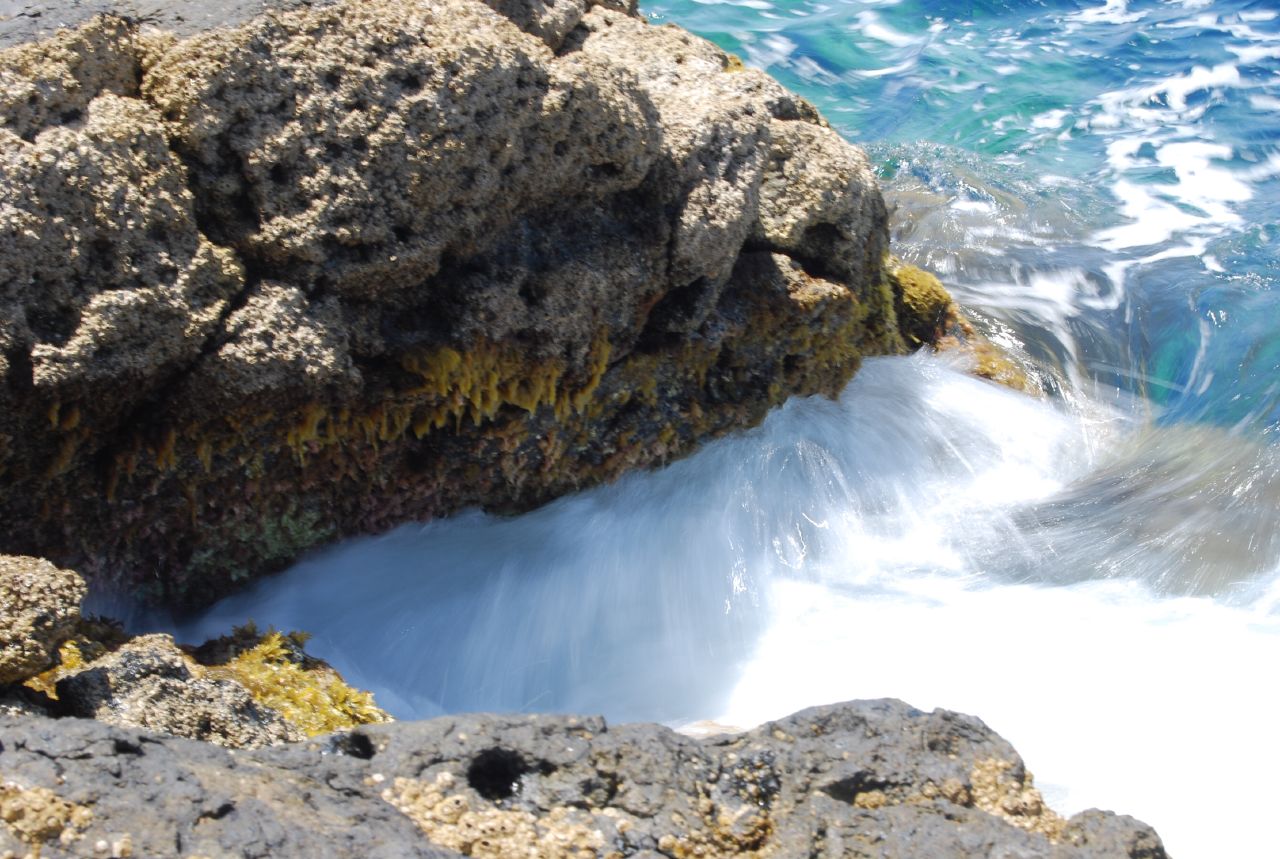

A natural pool scooped out of the black lava on the northern coast, near Punta Spadillo, filled and refreshed by waves breaking over its outer lip. On a calm day it is a warm, sheltered basin of perfectly clear water sitting in a field of jagged rock — one of the strangest and best swims on Pantelleria.
The catch is in the name. The pool is fed by the waves, and when there is any real sea running, water comes over the rim hard enough to make it dangerous. Locals judge it by eye before going in. If the swell is up, look at it and walk away — there will be another day.
Getting there means parking above and picking your way across broken lava, so shoes with grip are essential and flip-flops are useless. There is no shade, no facilities and nothing to hold on to. It is a short detour from the Punta Spadillo trail, which is the pleasant way to arrive.
Cala Cinque Denti
“Five teeth” — the name comes from the row of jagged lava rocks that break the surface across the mouth of this bay on the north coast. It is dramatic rather than convenient: dark cliffs, deep water, and a shoreline of broken volcanic rock rather than anything you would call a beach.
Swimming here is for people comfortable getting in and out over rock in open water, and it is best on flat calm days. The reward is a genuinely wild stretch of coast a short drive from town, and some of the most photogenic geology on the island — the whole bay is a textbook of Pantelleria’s volcanic history laid open in section.
Plenty of people come just to look, and that is a fair use of the place. It sits on the north coast within reach of Mursia and Karuscia, so it combines easily with a morning at a gentler cove; there is no circular bus route around the island, so reaching this stretch of the north coast by bus means riding out and back from town. Staying nearby, several dammusi on this side of the island put you within a few minutes of it, and there is more choice in our accommodation guide.
What should you bring to a Pantelleria beach?
Water shoes, more drinking water than you expect to drink, an umbrella if you want shade, a mask, and a bag to carry your rubbish home in. There are no kiosks at these coves and no bins at most of them. Nothing is sold at the water’s edge anywhere on this island.
A few additions worth the space: a thin foam mat, because lava is hard and uneven under a towel; reef-safe sunscreen, since glare off black rock and clear water is fierce; and a dry bag if you plan to swim anywhere with a scramble at either end. Snorkelling gear is worth buying before you travel rather than hoping to hire it here.
You will need a vehicle. The coves are scattered around the perimeter and the lanes down to them are narrow and steep; the bus network reaches the villages but rarely the water, and the airport service only covers the town run. See our guide to car and scooter rental, and book well ahead for August. If you would rather not drive, a day on a boat reaches coves the roads do not.
One last thing worth planning for: arriving by sea, the summer hydrofoil docks in town in the early afternoon, which is the worst hour to be looking for a cove. Get your bearings, eat something, and go for the first swim in the late afternoon when the rock has cooled. For everything else the island offers away from the water, see our guide to things to do in Pantelleria and to its food and wine.
No. Pantelleria is volcanic and its entire coastline is lava — flat rock shelves, boulder coves and a few tongues of rounded pebbles. There is no sand anywhere on the island, and no beach clubs, sunbed rental or lifeguards. Water shoes are essential rather than optional.
Cala Karuscia and Cala Gadir on the north-east coast. Both have near-level lava platforms with ladders, sheltered shallow water and an easy walk-in entry. Lago di Venere is also gentle, though its protection rules ban umbrellas and deckchairs. Avoid Balata dei Turchi, Martingana and Cala Cinque Denti with small children.
Yes. The park directorate has confirmed that mud treatments continue, subject to the cautions in municipal ordinance no. 95 of June 2023. What the ordinance does ban is umbrellas, deckchairs, canoes, surfboards and paddleboards, tents, fires, bicycles and motor vehicles at the lakeside, and laying towels on the shoreline vegetation.
The side the wind is not hitting. The maestrale blows from the north-west and the scirocco from the south-east, so when one coast is rough the other is usually calm. Check the forecast each morning and drive to the sheltered side — the island is under an hour across. Cala Levante and Cala Tramontana sit back to back for exactly this reason.
Almost none. The coves are public, free and unstaffed: no kiosks, no toilets, no showers, no sunbed hire and no lifeguards. Most have no bin either. Bring drinking water, shade, food and a bag for your rubbish, and expect patchy phone signal down on the rocks at the more remote spots.